


Joburg under threat from acid mine drainage
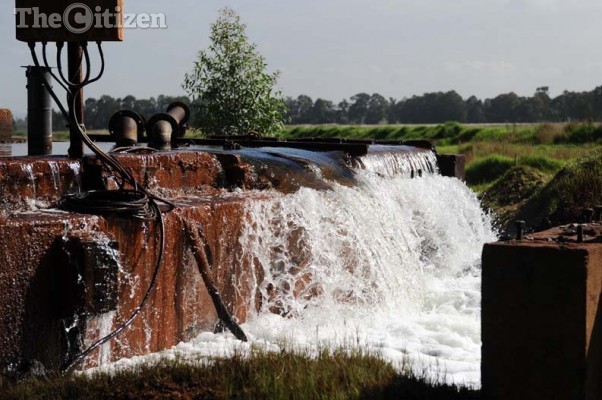
Acid mine drainage (AMD) is spilling out to the surface in the West Rand at a rate of around 30 million litres per month, leaving decimated ecosystems in its wake and posing critical danger to the future drinking water supply nationally – if left unchecked.
“This water is essentially diluted sulphuric acid, high in sulphates with a pH of two. Anything below a pH of five will dissolve uranium,” Mintails Mogale Gold general manager of operations Jan Jacobs told a media tour at the long abandoned 18 Winze ventilation shaft, visible from the company’s Mogale Gold processing plant near Krugersdorp.
Jaws dropped at the sheer volume of water gushing out of the shaft – preceded by the sound of rapidly flowing water and the poignant smell of what was later identified as high sulphate levels in the water.
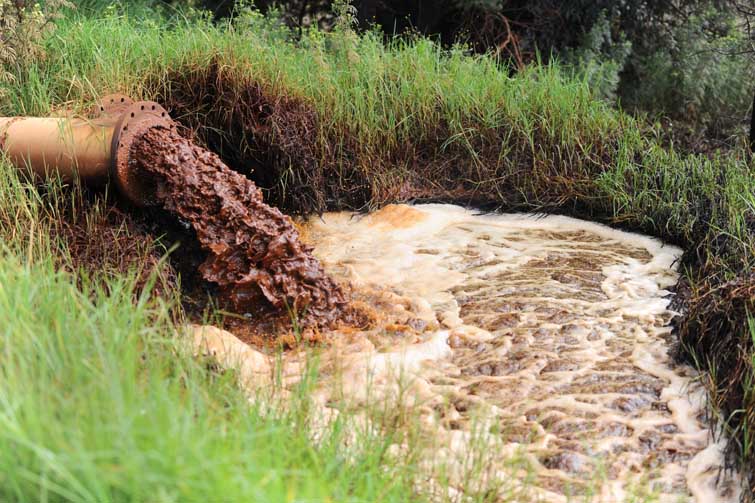
While decant – the formation of acids in exposed underground water – has happened largely uncontrolled in the area since 2002, the conversion of a nearby high-density sludge plant to a pumping station had stopped the surface decant for 17 months, Jacobs said.
The station is managed by the Trans Caledon Tunnel Authority and capable of pumping, treating and discharging 27 million litres of AMD per day. But recent heavy rains had increased the discharge rate to 30 million litres per day, rendering the pumping station’s capacity insufficient to stop three million litres of essentially metal-laden water from flooding the environment.
The AMD flows untreated to the headwaters of the nearby Tweelopiespruit, which flows through the Krugersdorp Nature Reserve, before joining other tributaries leading to the Vaal Barrage, said Jacobs.
“The Tweelopiespruit is essentially dead,” he said. “While some plant species seem to flourish, you won’t find fish or frogs there.”
Mintails chief financial officer Eddie Milne said the discharge rate was unlikely to slow naturally, necessitating the need to upgrade capacity of the TCTA’s pumping station.
“We have around 35 megalitres excess capacity on our mine’s pumping and treatment facilities and have offered the use of it to government at cost price. This would bring total capacity to around 70 megalitres per day to stop the decant – but an agreement is still pending,” said Milne.
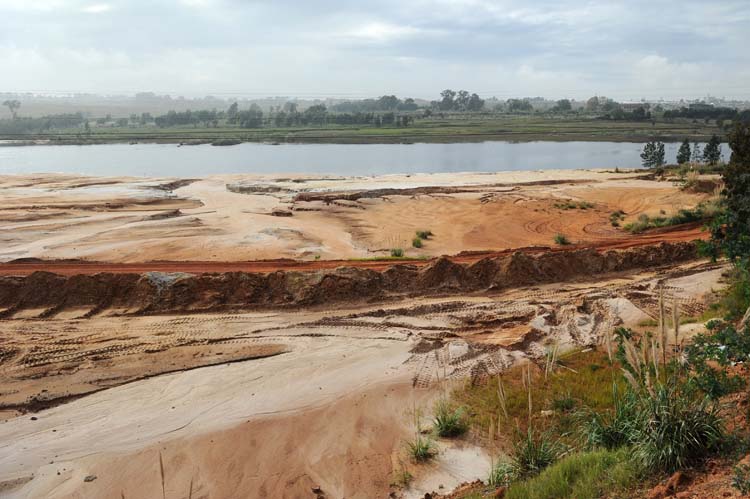
AMD is the result of a long history of mining companies abandoning mine shafts once they are no longer viable and washing their hands of the responsibility of rehabilitation – particularly pumping water out of inactive shafts, treating it and discharging it “safely” into the environment.
Acids form most often when rising underground water levels flood the extensive, interconnected underground tunnel network, stretching from the West to the East Rand – the product of a century of mining.
The water “picks up” residual heavy metals, like uranium and manganese, left behind in abandoned shafts and, after decant to the environment, the metals settle to form a radioactive sludge through a chemical reaction with oxygen.
Perhaps the greatest risk AMD poses is to the future drinking supply, given its natural tendency to flow towards the major regional drinking supply, the Vaal.
Adding lime to AMD is currently the preferred way of treatment known as neutralisation. It causes the heavy metals to “fall out” of treated water, before it is pumped to a natural water system.
“But the salts in the water are not removed, leading to excess salt loads in river systems. which physically fill up the riverbeds and reduce the amount of water,” said Mariette Liefferink, head of NGO, Federation for a Sustainable Environment.
“There are also links to negative impacts on livestock and irrigation from salt-heavy water.” The removal of salts – a process called desalination – is critical to future water security, – but it is costly, compared to neutralisation.
Pumping and treatment of AMD in the Central Basin, below Johannesburg, is expected to get underway soon with pumps at a new pumping station in Germiston installed in mid-March.
Interventions for the Eastern Basin, the majority of which is under the East Rand, were not yet underway, likely owing to underground water levels rising at a relatively slower rate than in the Central Basin.
SRC: http://citizen.co.za/151375/acid-attack/